
What Does ‘Long-Lasting Perfume’ Actually Mean? — Understanding Sillage, Projection & Longevity
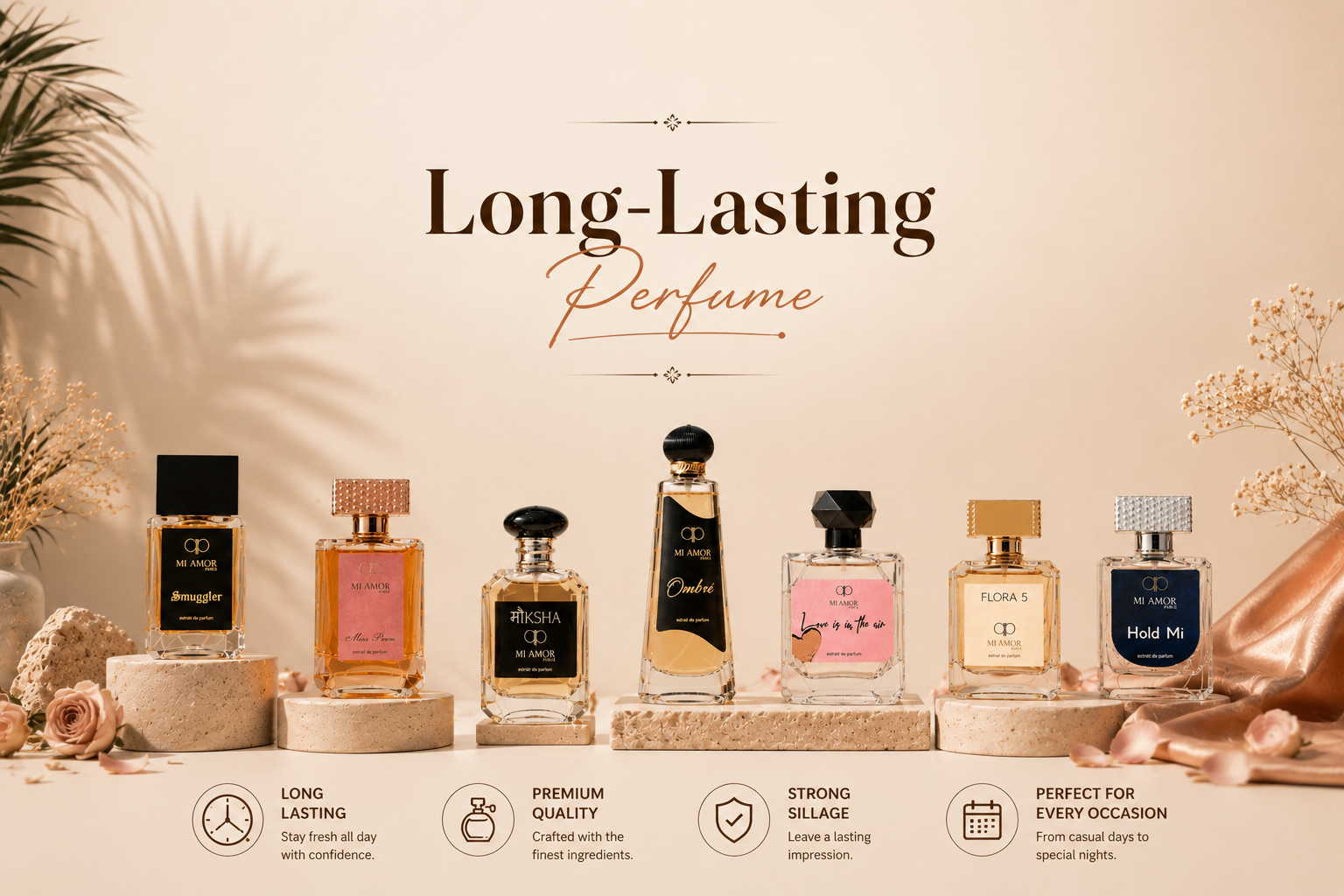
Every perfume brand in India — from ₹299 body mists to ₹15,000 niche bottles — puts “long-lasting” on the label. It’s become so overused that it means almost nothing anymore.
But here’s the thing: longevity is only one part of how a fragrance performs. Two other factors — sillage and projection — matter just as much, and most people have never heard of either. Once you understand all three, you’ll never pick a perfume the same way again.
Longevity: How Many Hours a Perfume Survives on Skin
This is the simplest one. Longevity is the total time you can detect a fragrance on your skin from the moment you spray it until it fully fades.
A typical Eau De Toilette (EDT) lasts around 3–5 hours. An Eau De Parfum (EDP) — which has a higher concentration of fragrance oils (usually 15–20%) — pushes that to 6–10 hours depending on your skin type, the weather, and the specific notes involved.
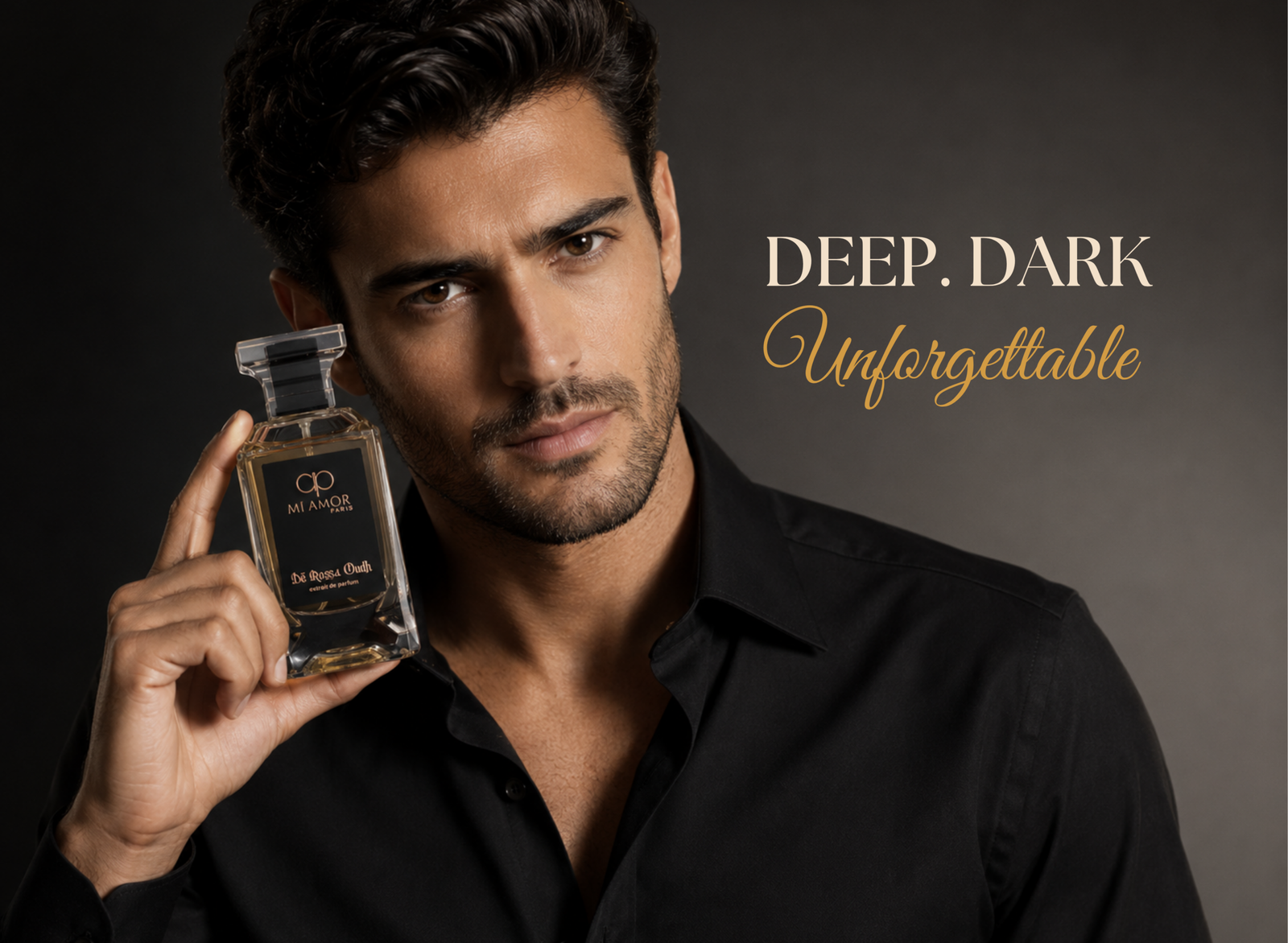
Heavier base notes like sandalwood, amber, and oudh naturally last longer than lighter top notes like lemon or bergamot. That’s why a fragrance like De Rossa Oudh — built on sandalwood and amber — clings to skin well past the 8-hour mark, while a citrus-forward scent needs reapplication by late afternoon.
What matters here: Don’t confuse “I can’t smell it anymore” with “it’s gone.” Your nose goes anosmic (stops registering) to your own perfume within 1–2 hours. Others around you can still smell it clearly. That’s why people around you compliment your fragrance hours after you’ve stopped noticing it yourself.
Projection: How Far Your Perfume Reaches
Projection is the distance a fragrance radiates from your body. Think of it as the bubble of scent around you.
A perfume with strong projection fills a room when you walk in. A soft projector stays close to the skin — you’d need to lean in to catch it. Neither is better universally. For a boardroom or a quiet dinner, something intimate works well. For a wedding or a night out, you want reach.
Perfumes with bold spice and resin notes tend to project harder. Marhaba, with its saffron-and-agarwood combination, fills a space naturally — you don’t need six sprays to make it work. On the other end, Miss Aqua is deliberately designed to stay closer, giving you a personal scent aura that doesn’t overpower a shared workspace.
What matters here: Indian heat boosts projection dramatically. A perfume that projects moderately in an air-conditioned store can become a room-filler at 38°C outdoors. If you’re buying for summer use, lean toward lighter fragrances — they’ll project more than you expect.
Sillage: The Trail You Leave Behind
Here’s where it gets interesting. Perfume sillage (pronounced “see-yazh,” from the French word for “wake”) is the scent trail that lingers in the air after you’ve walked past. It’s not about how far your perfume reaches while you’re standing still — that’s projection. Sillage is what stays behind when you leave.
A perfume with strong sillage is one people notice five minutes after you’ve left the elevator. It’s the ghost of your presence.
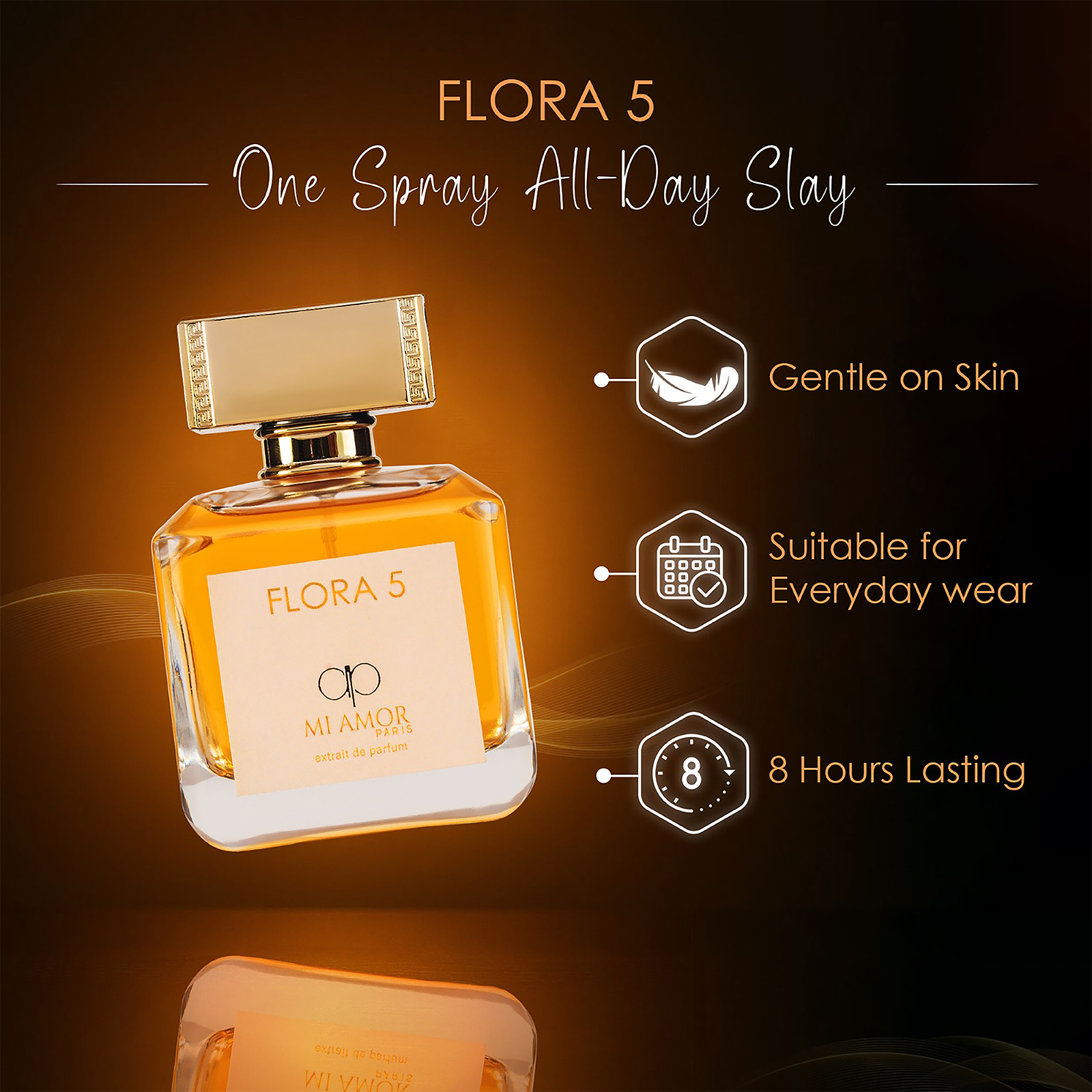
Fragrances with rich, resinous, or gourmand notes tend to leave the heaviest trails. Smuggler — with its coffee, vanilla, and honey base — has the kind of sillage that makes people turn their heads. Meanwhile, floral-powdery compositions like Flora 5 leave a softer, more elegant trail — noticeable but never intrusive.
What matters here: Sillage and longevity are not the same thing. A perfume can last 10 hours on skin but have almost no sillage (it stays close and quiet). Another might only last 6 hours but leave a trail everywhere you go. The “best” balance depends entirely on when and where you wear it.
So What Actually Makes a Perfume “Long-Lasting”?
It’s a combination of three things working together:
Concentration — EDPs last longer than EDTs because they contain more fragrance oil and less alcohol. Every perfume in the MI AMOR PARIS collection is an Eau De Parfum, which is why the 8+ hour performance claim actually holds up.
Note structure — Perfumes with substantial base notes (amber, musk, sandalwood, patchouli, vetiver) have more staying power than those built mainly on top notes. A fragrance like Moksha, anchored in woody amber, will outlast a pure citrus scent every time.
Your skin and environment — Oily skin holds fragrance better than dry skin. Humid weather extends sillage. Cold weather suppresses projection but can increase longevity. This is why the same perfume performs differently in a Bangalore monsoon versus a Rajasthan winter.
The Takeaway
Next time you see “long-lasting” on a perfume box, ask yourself: long-lasting in what way? Do you want a fragrance that quietly clings to your skin for 10 hours (longevity)? One that fills a room the moment you arrive (projection)? Or one that leaves a trail people remember after you’ve gone (sillage)?
The best perfumes deliver all three — and now you know exactly what to look for.
Explore the full MI AMOR PARIS perfume collection — every bottle is a 100ml EDP under ₹3,000, designed for real performance in Indian conditions.
- Aromatherapy Diffuser Oils
- Best Gift Ideas
- Best Luxury Perfumes
- Best Perfume for Every Season
- best perfume for summer
- Best Perfume Gift Shop
- best perfumes for gifting
- Best Smelling Perfume India
- Best Smelling Perfumes in India
- Candles
- Chakra Candles
- Chakra Scented Candles
- Diffuser Oils
- Essential Oils
- Fashions magazine
- Long Lasting EDP Perfume India
- Long-Lasting Perfume
- Luxury Fragrance Gift Guide
- Luxury Perfume India
- Luxury Perfumes
- Luxury Perfumes vs Affordable
- Oudh scented candles
- Perfume Guide
- Perfumes for Men
- Perfumes for Women
- Style
- Uncategorized
- Zodiac Home Fragrances


Subscribe To Our Newsletter
Subscribe for your email and get 10% off your first order!